
Choice Bareroot Trees-for Fruit, Nuts, Butterflies, Birds & Bees
Choice Bareroot Trees-for Fruit, Nuts, Butterflies, Birds & Bees
Share the love with friends!
No se pudo cargar la disponibilidad de retiro
- Vibe: Stunning seasonal color and wildlife magnet.
- Key Features: Famous for its incredibly vibrant, iridescent-purple berry clusters that encircle the arching stems in late summer and persist deep into winter.
- Benefits: Low-maintenance, drought-tolerant, and critical late-season food source for dozens of songbird species. Crushed leaves contain natural oils that repel mosquitoes.
- Best Uses: Shaded woodland gardens, privacy hedges, and naturalized erosion control.
- USDA Zones: 6 – 10.
- Soil Type: Highly adaptable; tolerates sandy, loamy, and clay soils provided they are well-drained.
- Space Needed: Space bushes 5 to 7 feet apart to accommodate a mature spread of 3–6 feet.
- Vibe: Nutrient-dense superfood and dynamic ornamental shrub.
- Key Features: Profuse clusters of white flowers in spring, followed by pea-sized black berries, and capped off with striking, brilliant red fall foliage.
- Benefits: Cold-hardy and widely adapted to wet or dry sites. The tart berries are exceptionally high in antioxidants and perfect for juices, jams, and wine.
- Best Uses: Edible landscaping, rain gardens, and permaculture food forests.
- USDA Zones: 3 – 8.
- Soil Type: Adapts to almost anything; grows well in boggy clay, dry sand, or rich, well-drained loams.
- Space Needed: Space plants 4 to 6 feet apart to form solid hedges or rows.
- Vibe: Fragrant early bloomer and prime wildlife thicket.
- Key Features: Blanketed in fragrant white flowers in early spring before the leaves appear. Produces delicious, tart red-to-yellow plums in summer.
- Benefits: Rapid growth and a suckering habit that creates vital bedding and nesting cover for upland birds, deer, and small game.
- Best Uses: Wildlife food plots, pollinator gardens, and naturalized property borders.
- USDA Zones: 5 – 9.
- Soil Type: Prefers loose, sandy, well-drained soils, but tolerates nutrient-poor upland soil well.
- Space Needed: Allow 8 to 12 feet between plants if you want individual small trees, or space at 5 feet apart for a dense wildlife hedge.
- Vibe: Rugged, urban-tolerant, and tough as nails.
- Key Features: Recognizable by its unique, rugged warty or corky bark. Produces sweet, dark-purple berry-like drupes that persist through the cold winter months.
- Benefits: Highly resilient in poor soils, high winds, and urban pollution. Provides excellent shade and serves as an important winter food source for birds like robins and cedar waxwings.
- Best Uses: Street tree, windbreaks, and large shade plantings.
- USDA Zones: 3 – 9.
- Soil Type: Grows in heavy clay, limestone, rocky soil, dry sands, or wet bottomlands.
- Space Needed: Give this large canopy tree plenty of room; space at least 30 to 40 feet away from structures and other trees.
- Vibe: The ultimate backyard feast for birds and wildlife.
- Key Features: A fast-growing native shade tree featuring lobed leaves and abundant, sweet, blackberry-like fruit that ripens in early summer.
- Benefits: Acts as a "wildlife magnet," drawing in everything from woodpeckers and orioles to squirrels, keeping them away from your cultivated commercial fruit crops.
- Best Uses: Orchard borders, permaculture designs, and shaded picnic areas.
- USDA Zones: 4 – 9.
- Soil Type: Prefers deep, moist, rich, well-drained soils but is highly adaptable to rocky or poor soils once established.
- Space Needed: Space trees 25 to 35 feet apart to let the wide canopy expand freely.
- Vibe: Aromatic, early-spring bloomer with multi-season interest.
- Key Features: Tiny clusters of bright yellow flowers in very early spring, bright green aromatic foliage, and glossy red berries on female plants in the fall.
- Benefits: The entire plant (leaves, twigs, and berries) emits a pleasant, spicy fragrance when crushed. It is also the exclusive host plant for the beautiful Spicebush Swallowtail butterfly.
- Best Uses: Shaded woodland edges, rain gardens, and fragrant hedges.
- USDA Zones: 4 – 9.
- Soil Type: Prefers moist, rich, organic soils typical of woodlands, but can adapt to heavy clay if given enough moisture.
- Space Needed: Space plants 6 to 10 feet apart to account for their rounded, multi-stemmed habit.
- Vibe: Classic, breathtaking spring elegance.
- Key Features: Showy, pristine white "petals" (bracts) in spring, deep green summer foliage, rich red autumn leaves, and glossy red berries enjoyed by songbirds.
- Benefits: A premier understory ornamental tree that adds spectacular multi-seasonal dimension to any landscape.
- Best Uses: Specimen tree, focal point in landscaped beds, and woodland margins.
- USDA Zones: 5 – 9.
- Soil Type: Requires acidic, rich, organic, well-drained soil. It does not tolerate heavy, poorly drained clay or extreme drought.
- Space Needed: Space trees 15 to 25 feet apart when planting near homes or larger canopy trees
8. Northern Catalpa (Catalpa speciosa)
- Vibe: Bold, fast-growing showstopper with tropical flair.
- Key Features: Famous for its giant, heart-shaped leaves, massive clusters of orchid-like white flowers in late spring, and unique, bean-like seed pods that hang down up to 20 inches long.
- Benefits: Provides rapid, dense shade and acts as a major pollinator draw for native bees. Extremely tough and adaptable, it easily withstands challenging site conditions where other trees struggle.
- Best Uses: Large shade tree, urban parks, reclamation sites, and eye-catching landscape focal points.
- USDA Zones: 4 – 8.
- Soil Type: Highly adaptable; thrives in deep, moist, well-drained soils but easily tolerates alkaline, acidic, compacted clay, or dry sandy soils.
- Space Needed: Give this massive tree plenty of room; space at least 30 to 40 feet away from structures, power lines, and other canopy trees.
9. Indigobush / False Indigo (Amorpha fruticosa)
- Vibe: Tough, nitrogen-fixing riparian superstar.
- Key Features: Features airy, fine-textured compound leaves and stunning spikes of deep indigo-purple flowers accented with bright orange anthers in early summer.
- Benefits: A member of the legume family that naturally improves soil fertility by fixing nitrogen. Its extensive fibrous root system provides superb erosion control. It serves as a vital larval host plant for native butterflies like the Southern Dogface.
- Best Uses: Stream bank stabilization, rain gardens, conservation windbreaks, and massed structural hedges.
- USDA Zones: 3 – 10.
- Soil Type: Exceptionally versatile; easily thrives in heavy clay, infertile dry sand, or wet, periodically flooded bottomlands.
Space Needed: Space plants 4 to 6 feet apart for a continuous thicket or mass hedge, or up to 8 feet apart to allow individual specimen shrubs to fill out.
10. Bitternut Hickory (Carya cordiformis)
Vibe: Grand, long-lived timber tree with spectacular autumn gold.
Key Features: Features handsome, pinnately compound leaves and striking, bright mustard-yellow winter buds. It matures into a stately canopy tree with highly uniform, tight grayish bark.
Benefits: The fastest-growing native hickory species. It provides exceptionally strong, shock-resistant wood and acts as a vital larval host for iconic giant silk moths, including the Luna moth.
Best Uses: Large properties, country estates, parks, and restoration forestry.
USDA Zones: 4 – 9.
Soil Type: Thrives best in rich, humusy, moist-to-wet soils, but can adapt to dry upland gravel or heavy clay once established.
Space Needed: Requires plenty of room; space at least 30 to 50 feet apart from structures and other large trees.
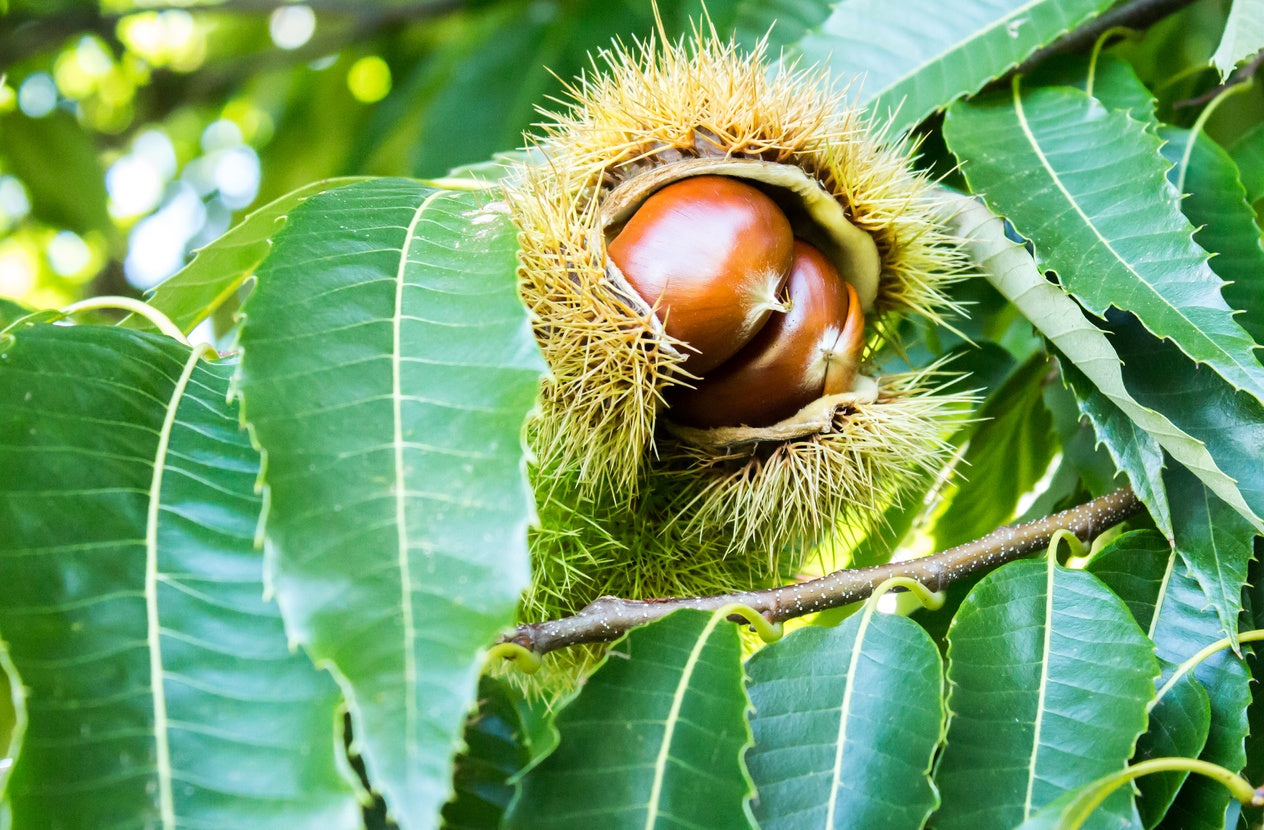
11. Hybrid Chinese Chestnut (Castanea dentata x mollissima)
Vibe: The legendary orchard comeback with heavy wildlife value.
Key Features: Glossy, dark green summer foliage that yields clusters of sweet, edible chestnuts encased in protective, spiky green burrs each fall.
Benefits: Combines the sweet flavor and upright growth of the native American chestnut with the strict blight resistance of the Chinese chestnut. A massive producer of high-protein mast, it is a premium choice for drawing in deer, turkeys, and orchard harvesters.
Best Uses: Commercial nut production, permaculture designs, homesteading orchards, and wildlife food plots.
USDA Zones: 4 – 8.
Soil Type: Requires deep, sandy loam to well-drained acidic soil. Will not tolerate heavy, wet clay or standing water.
Space Needed: Space trees 30 to 40 feet apart