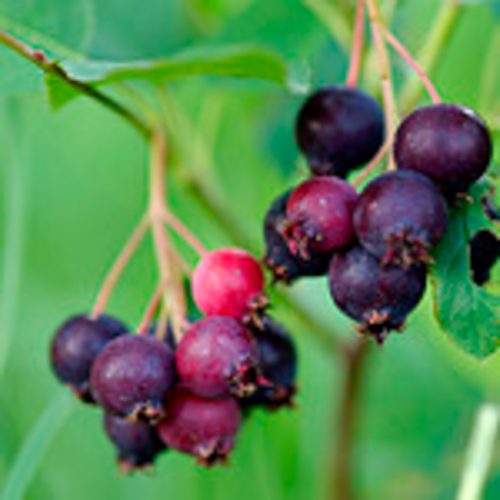


2+1 Free-Downy Service Berry Bush/Tree- Attracts Butterflies, Great Fruit (better than Blueberries) & Beautiful! 2-24”, 1-12” (bareroot)
2+1 Free-Downy Service Berry Bush/Tree- Attracts Butterflies, Great Fruit (better than Blueberries) & Beautiful! 2-24”, 1-12” (bareroot)
Share the love with friends!
Impossible de charger la disponibilité du service de retrait
We had wild June/Service/Saskatoon berries where I grew up and I always thought they made pies better than blueberries!
Buy two 24" taller Downy Service berries and get 1-12" free!
You can always share the extra trees with friends or give as gifts!
Very limited quantities these won't last long!
The Downy Serviceberry (Amelanchier arborea) thrives across USDA Hardiness Zones 4 through 9, a vast growing region covering almost the entire eastern half of North America, from southern Canada down to the Florida Panhandle and west to Texas and Minnesota.
Multi-Season Appeal: Known for its rapid transition from showy, early-spring white flowers to lush green summer foliage, followed by brilliant autumn displays of orange, gold, and deep red.
Edible Berries: Produces small, juicy, dark reddish-purple pomes in June (hence the nickname "Juneberry") that closely resemble blueberries in size and flavor.
They are highly prized by wildlife and used by humans for pies, jams, and craft brewing.
High Adaptability:
Displays exceptional resilience by growing as either a single-trunk small tree or a multi-stemmed large shrub. It easily tolerates tough conditions like heavy clay soil, variable pH levels, full sun to deep shade, and urban pollution.Downy Texture: True to its name, its newly emerging spring leaves and flower stalks are coated in a distinctive, soft, fine layer of silvery-white downy hairs.
Fruit Flavor Profile:
Earthy, sweet, and complex. The berries add subtle almond and blueberry notes, while traditional gruit herbs like sweet gale, yarrow, or mugwort provide a bitter, medicinal balance to replace hops.Appearance: Typically pours a deep amber, hazy reddish-purple, or ruby color depending on the volume of serviceberries used during the brewing process.Availability: Usually found exclusively as a seasonal, small-batch offering at experimental craft breweries or hyper-local foraging events.
- Edible Berries: Rich in antioxidants. They taste like a mix of blueberry and almond. Excellent for pies, jams, and fresh eating.
- Four-Season Interest: Features clusters of white flowers in spring, heavy berry yields in summer, brilliant red-orange foliage in autumn, and elegant silver bark in winter.
- Wildlife Value: Highly attractive to pollinating bees in early spring and native songbirds in summer.
- Light: Full sun to partial shade. Full sun produces the sweetest and most abundant berries.
- Soil: Prefers moist, well-draining, acidic to neutral soil, though it tolerates clay better than blueberries do.
- Downy Serviceberry (Amelanchier arborea) bushes typically grow to mature heights of 15 to 25 feet (occasionally reaching 30 feet), with a spread of 10 to 15 feet.
- Hardiness: Exceptionally cold-tolerant, typically thriving across USDA Zones 2 through 9 depending on the specific variety.