

1
/
von
5
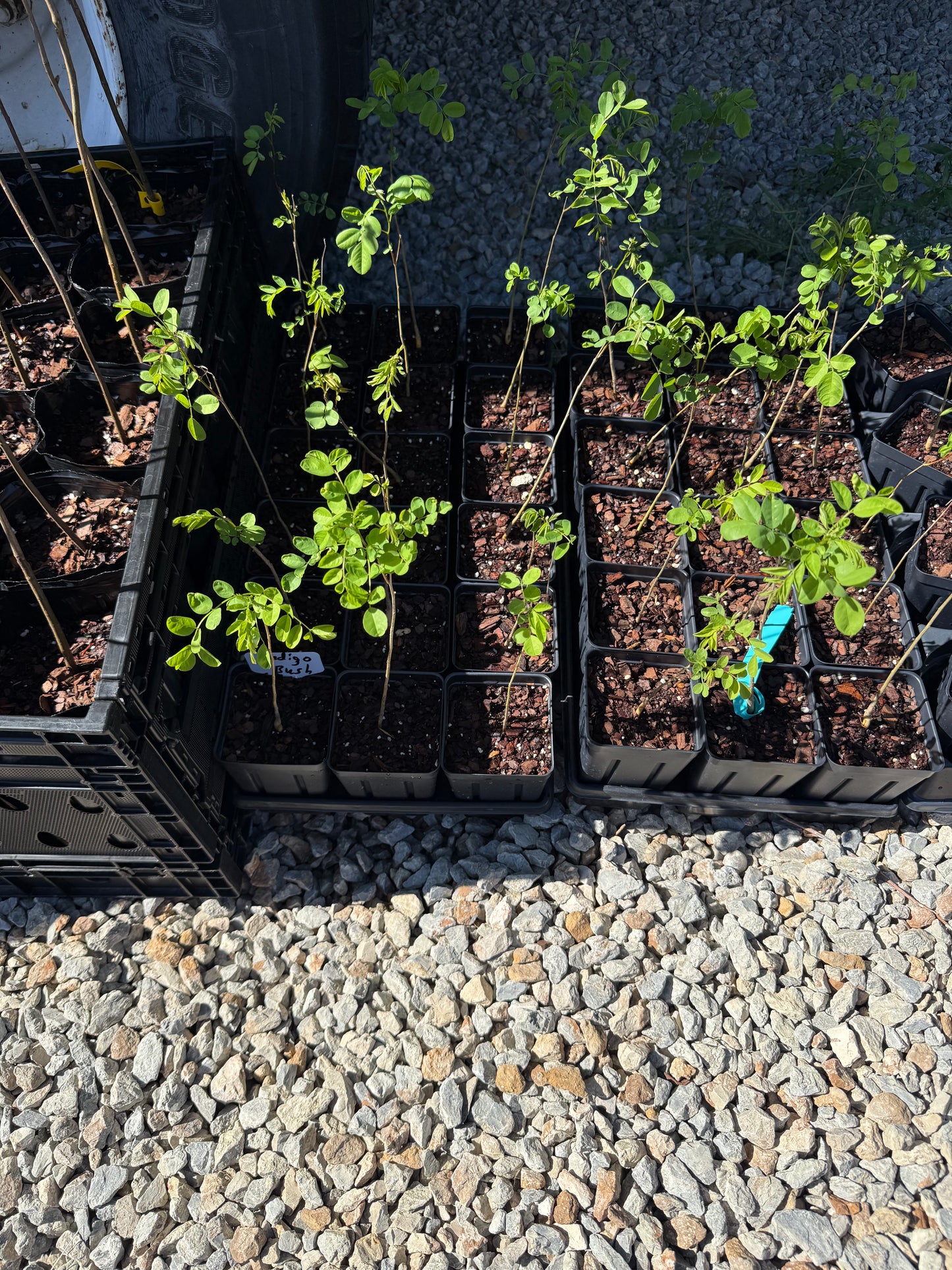
1 Indigo Bush / False Indigo (Amorpha fruticosa-Great for Bees & Butterflies 3.5x5” pots. Use Tea, Cosmetics, dye
1 Indigo Bush / False Indigo (Amorpha fruticosa-Great for Bees & Butterflies 3.5x5” pots. Use Tea, Cosmetics, dye
Normaler Preis
$12.49 USD
Normaler Preis
$14.99 USD
Verkaufspreis
$12.49 USD
Grundpreis
/
pro
Versand wird beim Checkout berechnet
Share the love with friends!
Verfügbarkeit für Abholungen konnte nicht geladen werden
- Indigo Bush / False Indigo (Amorpha fruticosa)
- Blooms Early Sping and does not die back to the ground each year like Indigo (Baptisia australis.
- Wildlife Attraction: Larval host for the silver-spotted skipper, southern dogface butterfly, and gray hairstreak. Flowers attract native bees and butterflies. Seeds are eaten by quail.
- Human Food or Wildlife Uses: Historically used to produce a low-grade blue dye. Wildlife use the dense shrubbery for nesting (e.g., red-winged blackbirds) and stream-bank cover. Legume root system stabilizes soil and fixes nitrogen.
- Size & Space Needed: Grows 6–12 feet tall and 5–10 feet wide. Requires 5–8 feet of spacing.
- USDA Growing Zone: Zones 3 – 9.
-
1. Natural Dyeing and Pigments
- Art and Cosmetics: Historically, the pigment has been used for painting (like "Maya Blue"), body paint, and as a cosmetic (such as traditional eye shadow). [1, 2]
-
2. Hair Coloring3. Traditional Medicine4. Agriculture and Soil Health5. Edible Uses- Nutritional Superfood: In some regions, various parts of the plant are brewed into indigo tea. The leaves are highly nutritious, boasting high polyphenol levels, and can be processed into powders for smoothies, sauces, and spices