

(1) 18" Catalpa (Northern)- Great for Bees & Gorgeous Huge Heart Shaped Leaves (Bareroot)
(1) 18" Catalpa (Northern)- Great for Bees & Gorgeous Huge Heart Shaped Leaves (Bareroot)
Precio habitual
$8.95 USD
Precio habitual
Precio de oferta
$8.95 USD
Precio unitario
/
por
Los gastos de envío se calculan en la pantalla de pago.
Share the love with friends!
No se pudo cargar la disponibilidad de retiro
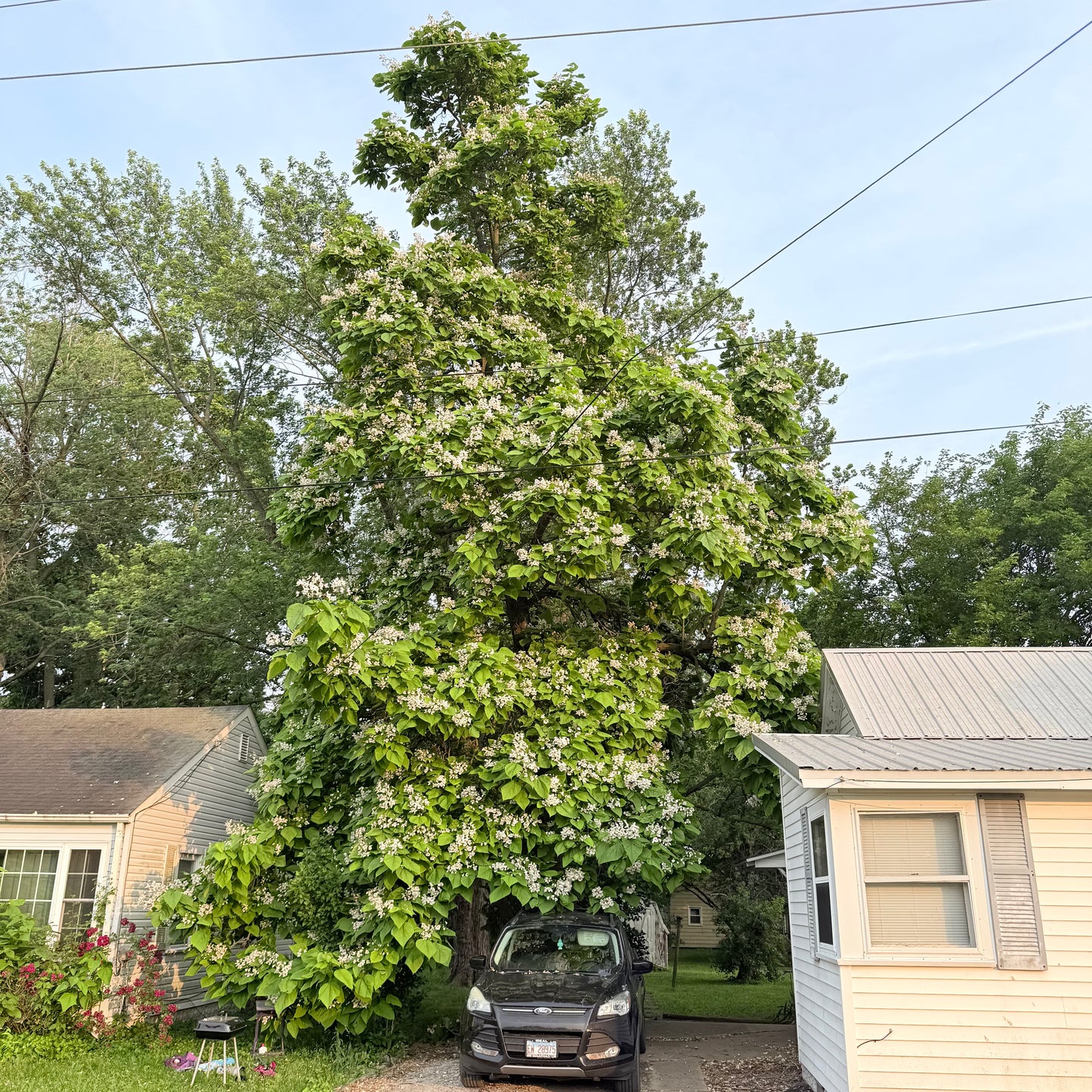
Like the yellow tulip poplar, the Northern Catalpa (Catalpa speciosa) is a fast-growing native tree, but it exhibits completely different structural traits and a much higher tolerance for poor planting sites.
Wildlife Offerings
- Pollinators: Large, showy, trumpet-shaped white flowers bloom in late spring to guide bees, butterflies, and hummingbirds. Uniquely, the tree releases nectar and a sweet scent at night to feed nocturnal pollinators like moths.
- The Specialist Host: It is the exclusive host plant for the Catalpa Sphinx Moth. Its caterpillars ("catalpa worms") provide a high-protein food source for predatory insects and birds, and they are highly prized by anglers as live fish bait.
- Shelter: As the tree ages, its brittle wood naturally creates hollow trunk cavities, offering nesting spots for cavity-nesting birds (like screech owls) and small mammals.
Soil Types
- Preference: Thrives best in deep, moist, fertile loams.
- Moisture Adaptability: Highly adaptable; it easily tolerates wet, dry, and seasonally flooded sites.
- Texture Adaptability: Grows well across virtually all soil profiles, including heavy clay, silty, sandy, or gravelly soils.
- pH Range: Extremely tolerant of pH variations, easily managing highly alkaline and acidic conditions alike ranging from 5.5 to 8.2.
USDA Hardiness Zones:
- Range: Reliable in USDA Zones 4 through 8.
- Considerations: It is much hardier against bitter northern winters than its close relative, the Southern Catalpa, and it tolerates road salt, making it a tough contender for harsh Midwestern or Northeastern climates.
Space Requirements
- Mature Spread: Forms a narrow-to-oval canopy spanning 20 to 40 feet wide (reaching 50 to 60 feet tall).
- Structural Clearance: Plant at least 30 feet away from fences, homes, and septic lines. Its large, heart-shaped leaves and long, bean-like seed pods create heavy seasonal ground litter that can clog gutters or pool filters.
- Wind Protection: Because the wood is brittle and the 12-inch leaves are massive, plant the tree where it has some shelter from strong winds to prevent severe branch breakage.