

Choice of Bareroot Trees- for Food, Nuts, Butterflies, Birds & Bees
Choice of Bareroot Trees- for Food, Nuts, Butterflies, Birds & Bees
Precio habitual
$9.95 USD
Precio habitual
$0.00 USD
Precio de oferta
$9.95 USD
Precio unitario
/
por
Los gastos de envío se calculan en la pantalla de pago.
Share the love with friends!
No se pudo cargar la disponibilidad de retiro
-
American Beautyberry (Callicarpa americana)
- Wildlife Attraction: Attracts over 40 species of songbirds, armadillos, foxes, opossums, butterflies, and native moths.
- Human Food or Wildlife Uses: Humans use berries for jellies, wines, and teas. Wildlife consume the fruit for late-winter moisture. Shrubby branches provide bird nesting sites.
- Size & Space Needed: Grows 3–6 feet tall and 3–6 feet wide. Requires 5–7 feet of spacing.
- USDA Growing Zone: Zones 6 – 10.
-
Aronia Berry / Black Chokeberry (Aronia melanocarpa)
- Wildlife Attraction: Attracts late-winter songbirds, small native bees, pollinators, wild turkeys, and foraging mammals.
- Human Food or Wildlife Uses: Used in pies, jams, and juices. Highest in Anti-oxidant of any fruit native to USA; also very high in Polyphenols! Serves as a standby winter food source for wildlife. Forms tight habitat hedges.
- Size & Space Needed: Grows 3–6 feet tall and 3–6 feet wide. Requires 4–6 feet of spacing.
- USDA Growing Zone: Zones 3 – 8.
-
Bitternut Hickory (Carya cordiformis)
- Wildlife Attraction: Larval host for the Hickory Horned Devil moth. Attracts wood ducks, wild turkeys, squirrels, cavity-nesting birds, and bats.
- Human Food or Wildlife Uses: Wood is utilized for meat-smoking; nuts can be processed into flour. Wildlife eat the high-fat nuts. Canopy provides nesting space.
- Size & Space Needed: Grows 50–70 feet tall and 40–50 feet wide. Requires 30–40 feet of spacing.
- USDA Growing Zone: Zones 4 – 9.
-
Northern Catalpa (Catalpa speciosa)
- Wildlife Attraction: Larval host for the Catalpa Sphinx moth. Attracts honeybees, hummingbirds, bumblebees, woodpeckers, and cavity-dwelling animals.
- Human Food or Wildlife Uses: Timber is used for fence posts. Catalpa worms are used as fish bait. Large leaves provide summer shade cover.
- Size & Space Needed: Grows 40–70 feet tall and 20–40 feet wide. Requires 25–35 feet of spacing.
- USDA Growing Zone: Zones 4 – 8.
-
Chinese Chestnut (Castanea mollissima)
- Wildlife Attraction: Attracts white-tailed deer, wild turkeys, squirrels, blue jays, and early summer pollinators.
- Human Food or Wildlife Uses: Produces edible nuts for roasting. Provides carbohydrates for wildlife. Branches offer low canopy shelter.
- Size & Space Needed: Grows 40–60 feet tall and 40–60 feet wide. Requires 30–40 feet of spacing.
- USDA Growing Zone: Zones 4 – 8.
-
Chickasaw Plum (Prunus angustifolia)
- Wildlife Attraction: Attracts native bees, early pollinators, bobwhite quail, wild turkeys, deer, foxes, and raccoons.
- Human Food or Wildlife Uses: Used for fresh eating, tarts, and jellies. Provides summer soft mast for wildlife. Thorny thickets offer escape cover.
- Size & Space Needed: Grows 6–12 feet tall (up to 25 feet) and 6–12 feet wide. Requires 10–15 feet of spacing.
- USDA Growing Zone: Zones 5 – 9.
-
White Flowering Dogwood (Cornus florida)
- Wildlife Attraction: Attracts over 35 species of birds (including cardinals and robins), squirrels, chipmunks, and deer. Serves as a host plant for the Spring Azure butterfly.
- Human Food or Wildlife Uses: Berries are toxic to humans but serve as a high-fat autumn energy food for migrating birds. Dappled lower canopy provides shelter.
- Size & Space Needed: Grows 15–30 feet tall and 15–30 feet wide. Requires 15–20 feet of spacing.
- USDA Growing Zone: Zones 5 – 9.
-
Hackberry (Celtis occidentalis)
- Wildlife Attraction: Larval host for the Hackberry Emperor butterfly. Attracts robins, cedar waxwings, flickers, and small foraging mammals.
- Human Food or Wildlife Uses: Berries are edible for humans. Serves as a primary winter berry source for birds. Branches provide nesting cover for songbirds.
- Size & Space Needed: Grows 40–60 feet tall and 25–45 feet wide. Requires 20–30 feet of spacing.
- USDA Growing Zone: Zones 2 – 9.
-
Indigo Bush / False Indigo (Amorpha fruticosa)
- Wildlife Attraction: Larval host for the silver-spotted skipper, southern dogface butterfly, and gray hairstreak. Flowers attract native bees and butterflies. Seeds are eaten by quail.
- Human Food or Wildlife Uses: Historically used to produce a low-grade blue dye. Wildlife use the dense shrubbery for nesting (e.g., red-winged blackbirds) and stream-bank cover. Legume root system stabilizes soil and fixes nitrogen.
- Size & Space Needed: Grows 6–12 feet tall and 5–10 feet wide. Requires 5–8 feet of spacing.
- USDA Growing Zone: Zones 3 – 9.
-
Kentucky Coffee Tree (Gymnocladus dioicus)
- Wildlife Attraction: Canopy is used by nesting birds. Attracts large native moths and butterflies. Minimal mammal browsing occurs due to raw seed toxicity.
- Human Food or Wildlife Uses: Roasted seeds are used as a coffee substitute. High branches offer bird nesting. Leaves provide dappled summer shade.
- Size & Space Needed: Grows 60–80 feet tall and 40–50 feet wide. Requires 30–40 feet of spacing.
- USDA Growing Zone: Zones 3 – 8.
-
Red Mulberry (Morus rubra)
- Wildlife Attraction: Attracts over 50 bird species, opossums, raccoons, squirrels, and foxes. Hosts Mourning Cloak butterflies.
- Human Food or Wildlife Uses: Berries are used for fresh fruit, pies, and jams. Provides summer soft mast for wildlife. Dense canopy offers nesting cover.
- Size & Space Needed: Grows 35–50 feet tall and 35–40 feet wide. Requires 25–30 feet of spacing.
- USDA Growing Zone: Zones 4 – 9.
-
Pin Oak (Quercus palustris)
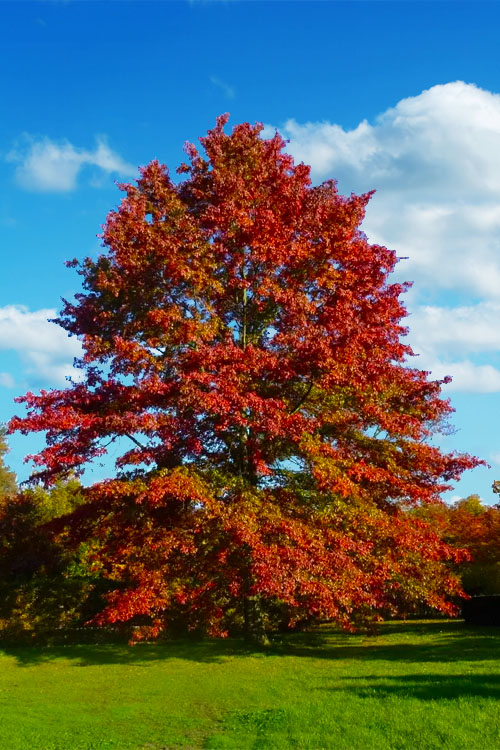
- Wildlife Attraction: Small acorns feed wood ducks, mallards, wild turkeys, deer, and rodents. Supports over 500 species of caterpillars.
- Human Food or Wildlife Uses: Used for shade and construction timber. Acorns are more easily swallowed by smaller birds and mammals than other oak species. Lower branches provide low-level screening cover.
- Size & Space Needed: Grows 60–70 feet tall and 25–40 feet wide. Requires 30–40 feet of spacing.
- USDA Growing Zone: Zones 4 – 8.
-
Spicebush (Lindera benzoin)
- Wildlife Attraction: Primary larval host for the Spicebush Swallowtail butterfly and Promethea silkmoth. Berries are eaten by wood thrushes, catbirds, and migrating songbirds.
- Human Food or Wildlife Uses: Leaves, twigs, and berries are used for herbal teas and allspice seasonings. Female plants provide high-fat berries for autumn bird migration energy.
-
Yellow tulip tree (Liriodendron tulipifera), also called the tulip poplar or yellow poplar, is the tallest hardwood in eastern North America. It is a fast-growing, long-lived shade tree known for its distinctive, four-lobed leaves, cup-shaped blossoms, and brilliant golden-yellow fall foliage. [1, 2, 3, 4, 5, 6]Size
- Mature Height: Typically reaches 60 to 90 feet in cultivation, but can exceed 100 feet in the wild. Exceptional specimens can reach 150 to nearly 200 feet.
- Mature Spread: 30 to 50 feet wide.
- Growth Rate: Fast-growing, often adding 2 feet or more in height per year under optimal conditions.
- Trunk Diameter: Mature trunks usually reach 4 to 6 feet, occasionally growing up to 8 to 10 feet wide.[1, 2, 3, 4, 5, 6, 7]
Key Characteristics- Flowers: In late spring, it produces large, cup-shaped, greenish-yellow flowers with a prominent orange band at the base, which resemble tulips. They generally appear high in the canopy after the leaves have emerged. [1, 2, 3]
- Leaves: Bright green, waxy leaves with four lobes and a distinct flat or truncate tip. They turn a stunning golden-yellow in the fall. [1, 2, 3]
- Structure: Features a very straight, column-like trunk with high, pyramidal to broad-conical branching on mature trees. The winter buds are distinctively shaped like a duck's bill. [1, 2, 3, 4]
- Fruit: Produces cone-like, scaly brown clusters of winged seeds (samaras) that mature in the fall and disperse over winter.
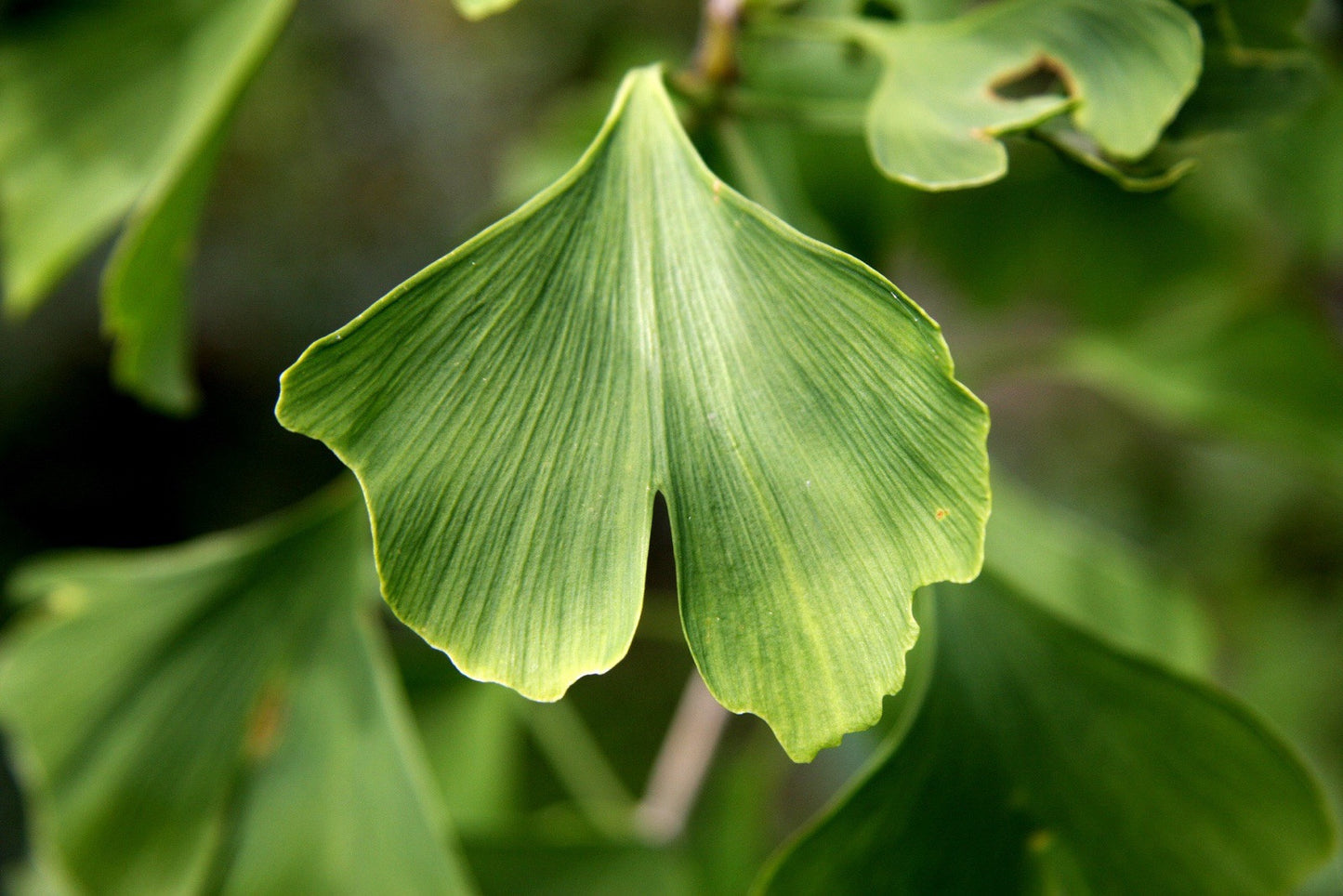
Ginkgo biloba has gorgous yellow maidenhair colored leaves in the fall and the leaves are used for their health & memory benefits. It is the oldest living tree species!