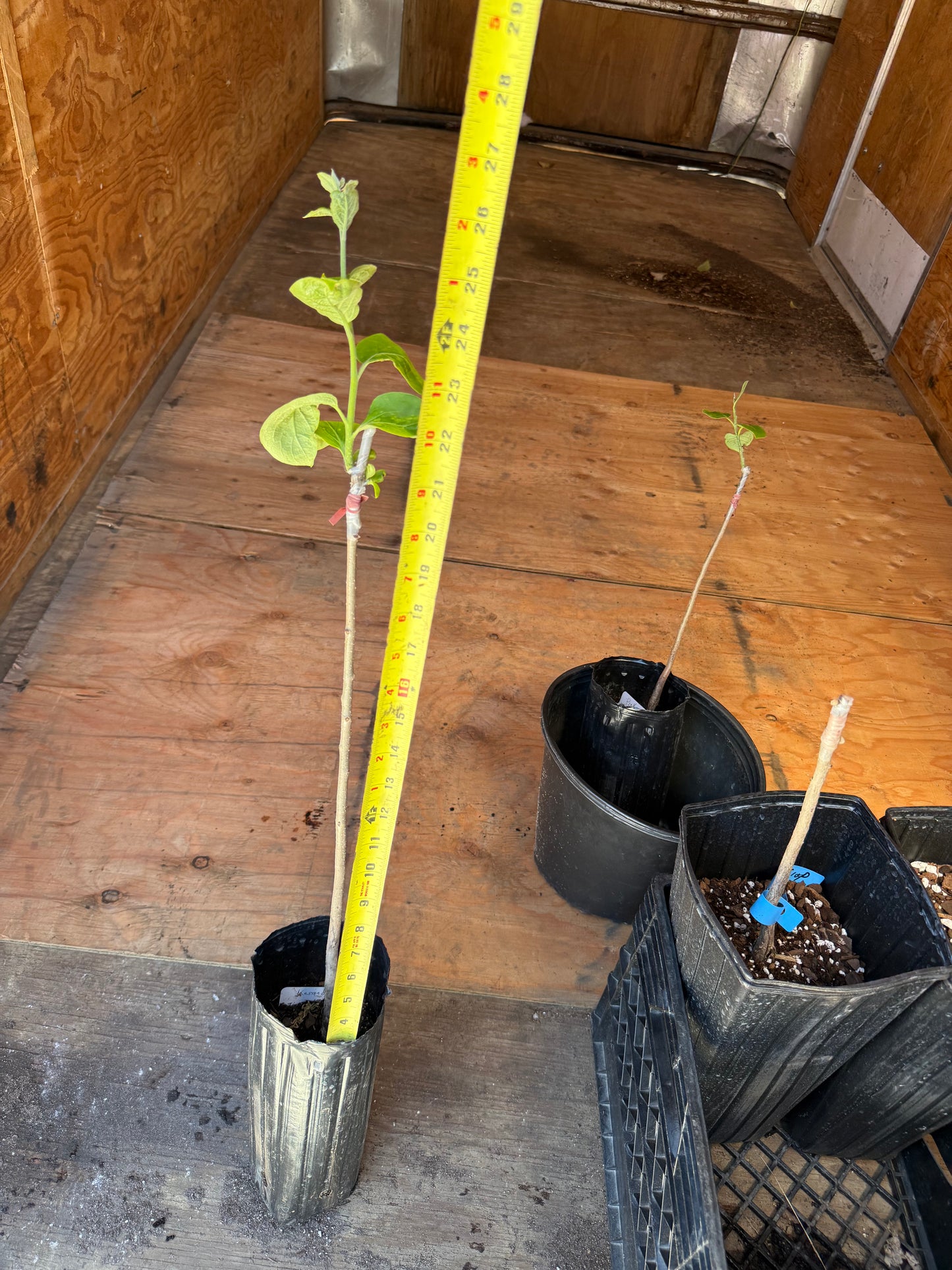


Kassandra Persimmons Grafted 26-28” Tall in a 4x12” tree pot
Kassandra Persimmons Grafted 26-28” Tall in a 4x12” tree pot
Precio habitual
$59.95 USD
Precio habitual
$64.95 USD
Precio de oferta
$59.95 USD
Precio unitario
/
por
Los gastos de envío se calculan en la pantalla de pago.
Share the love with friends!
No se pudo cargar la disponibilidad de retiro
Kasandra persimmon is a cold-hardy, complex hybrid persimmon (a cross between American and Asian varieties). It produces medium-to-large, sweet, astringent orange/red fruit that must be eaten or processed when fully soft and jelly-like to avoid a bitter taste.
Key highlights of the Kasandra persimmon:
- Cold Hardiness: Exceptionally resilient, tested to withstand freezing temperatures down to -11 F
- Flavor Profile: Known for a rich, sweet, honey-like taste similar to the premium Hachiya variety but without the characteristic aftertaste of American persimmons.
- Ripening: Ripens relatively early in the season compared to other persimmon varieties, making it great for regions with shorter summers.
-
Kasandra is an elite hybrid persimmon known for being highly cold-hardy and producing exceptionally sweet, rich fruit. It is a specific cross between the Asian Kaki ('Great Wall') and American (Diospyros virginiana) persimmon species, bred to combine the large size and firm texture of Asian varieties with the deep winter resilience of American trees.Key Characteristics
- Flavor & Texture: It features a rich, honey-like flavor that is considered superior to many standard American persimmons. The flesh can be somewhat stringy but is intensely sweet and lacks the harsh "American" aftertaste.
- Astringency: Kasandra is an astringent variety. It must be allowed to ripen fully—until it turns a deep reddish-orange and becomes soft to the touch—before eating. [
- Cold Hardiness: It is highly cold-hardy, capable of withstanding temperatures well below freezing without significant dieback.
- Fruit Size & Seeds: Fruits typically measure about 1.5 to 3 inches in diameter. The fruit tends to be seedy, especially if it is pollinated by a male Asian persimmon.
- Harvest Time: Ripens early-to-mid season, making it ideal for growers in regions with shorter summers.