

1
/
de
2
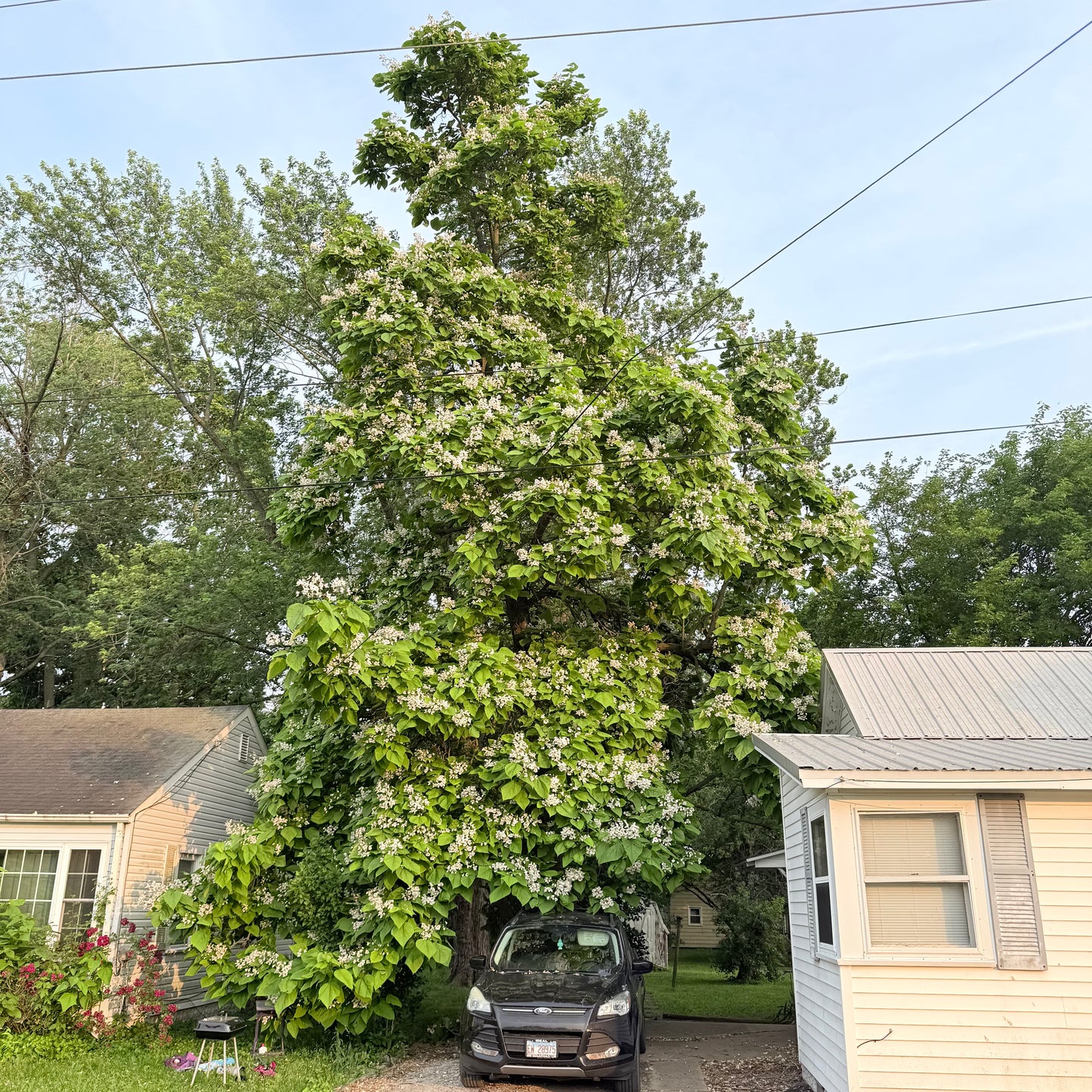
(1) 18" Catalpa (Northern)- Great for Bees & Gorgeous Huge Heart Shaped Leaves (Bareroot)
(1) 18" Catalpa (Northern)- Great for Bees & Gorgeous Huge Heart Shaped Leaves (Bareroot)
Prix habituel
$8.95 USD
Prix habituel
Prix promotionnel
$8.95 USD
Prix unitaire
/
par
Frais d'expédition calculés à l'étape de paiement.
Share the love with friends!
Impossible de charger la disponibilité du service de retrait
Like the yellow tulip poplar, the Northern Catalpa (Catalpa speciosa) is a fast-growing native tree, but it exhibits completely different structural traits and a much higher tolerance for poor planting sites.
Wildlife Offerings
- Pollinators: Large, showy, trumpet-shaped white flowers bloom in late spring to guide bees, butterflies, and hummingbirds. Uniquely, the tree releases nectar and a sweet scent at night to feed nocturnal pollinators like moths.
- The Specialist Host: It is the exclusive host plant for the Catalpa Sphinx Moth. Its caterpillars ("catalpa worms") provide a high-protein food source for predatory insects and birds, and they are highly prized by anglers as live fish bait.
- Shelter: As the tree ages, its brittle wood naturally creates hollow trunk cavities, offering nesting spots for cavity-nesting birds (like screech owls) and small mammals.
Soil Types
- Preference: Thrives best in deep, moist, fertile loams.
- Moisture Adaptability: Highly adaptable; it easily tolerates wet, dry, and seasonally flooded sites.
- Texture Adaptability: Grows well across virtually all soil profiles, including heavy clay, silty, sandy, or gravelly soils.
- pH Range: Extremely tolerant of pH variations, easily managing highly alkaline and acidic conditions alike ranging from 5.5 to 8.2.
USDA Hardiness Zones:
- Range: Reliable in USDA Zones 4 through 8.
- Considerations: It is much hardier against bitter northern winters than its close relative, the Southern Catalpa, and it tolerates road salt, making it a tough contender for harsh Midwestern or Northeastern climates.
Space Requirements
- Mature Spread: Forms a narrow-to-oval canopy spanning 20 to 40 feet wide (reaching 50 to 60 feet tall).
- Structural Clearance: Plant at least 30 feet away from fences, homes, and septic lines. Its large, heart-shaped leaves and long, bean-like seed pods create heavy seasonal ground litter that can clog gutters or pool filters.
- Wind Protection: Because the wood is brittle and the 12-inch leaves are massive, plant the tree where it has some shelter from strong winds to prevent severe branch breakage.