

1
/
de
8
Choice (Potted) Trees- for Food, Nuts, Butterflies, Birds & Bees (4x12" Deep tree pots)
Choice (Potted) Trees- for Food, Nuts, Butterflies, Birds & Bees (4x12" Deep tree pots)
Prix habituel
$18.95 USD
Prix habituel
$27.95 USD
Prix promotionnel
$18.95 USD
Prix unitaire
/
par
Frais d'expédition calculés à l'étape de paiement.
Share the love with friends!
Impossible de charger la disponibilité du service de retrait
-
American Beautyberry (Callicarpa americana)
- Wildlife Attraction: Attracts over 40 species of songbirds, armadillos, foxes, opossums, butterflies, and native moths.
- Human Food or Wildlife Uses: Humans use berries for jellies, wines, and teas. Wildlife consume the fruit for late-winter moisture. Shrubby branches provide bird nesting sites.
- Size & Space Needed: Grows 3–6 feet tall and 3–6 feet wide. Requires 5–7 feet of spacing.
- USDA Growing Zone: Zones 6 – 10.
-
Cooking the berries with sugar completely transforms them, unlocking a delicious, unique flavor profile. [1]When eaten raw, American beautyberries are often dry, mealy, and relatively tasteless. However, heating them releases their natural juices, and adding sugar neutralizes their mild astringency. The result is a vibrant, ruby-red liquid with a distinct flavor that people often describe as a mix of elderberry, hibiscus, and mild apple, with a pleasant herbal or floral undertone. [1, 2, 3]How to Bring Out the Flavor: Simple Master RecipeThe most popular way to capture this flavor is by making a basic Beautyberry Juice Base, which you can easily turn into jelly, syrup, or a glaze. [1, 2]
- Clean: Wash 6 to 8 cups of fresh, ripe purple berries and remove any green stems or bugs.
- Boil: Place the berries in a pot with just enough water to cover them (about 4 to 6 cups). Bring to a boil and simmer for 20 minutes. [1]
- Mash & Strain: Mash the berries with a potato masher while they cook to release all the juices. Strain the mixture through a fine-mesh strainer or cheesecloth, discarding the seeds and pulp. [1, 2]
- Sweeten: Return the clear, bright pink liquid to the pot. Add sugar to taste—usually 3 to 4 cups of sugar for every 4 cups of juice—and bring it to a boil until the sugar completely dissolves.
Great Ways to Use Your Sweetened Beautyberry- Floral Jelly: Add a box of powdered fruit pectin and a splash of lemon juice to your sweetened juice base, then boil hard for one minute before pouring into jars to set. [1]
- Pancake Syrup: Simmer the juice and sugar longer without pectin until it reduces into a thick, pourable syrup for waffles, pancakes, or vanilla ice cream.
- Savory Meat Glaze: Mix a bit of the sweetened beautyberry juice with rosemary and apple cider vinegar to make a beautiful glaze for roasted pork or chicken.
- Mocktails & Teas: Stir a spoonful of the syrup into iced tea, lemonade, or sparkling water for a refreshing, colorful summer drink.
-
Aronia Berry / Black Chokeberry (Aronia melanocarpa)
- Wildlife Attraction: Attracts late-winter songbirds, small native bees, pollinators, wild turkeys, and foraging mammals.
- Human Food or Wildlife Uses: Used in pies, jams, and juices. Highest in Anti-oxidant of any fruit native to USA; also very high in Polyphenols! Serves as a standby winter food source for wildlife. Forms tight habitat hedges.
- Size & Space Needed: Grows 3–6 feet tall and 3–6 feet wide. Requires 4–6 feet of spacing.
- USDA Growing Zone: Zones 3 – 8.
-
Bitternut Hickory (Carya cordiformis)
- Wildlife Attraction: Larval host for the Hickory Horned Devil moth. Attracts wood ducks, wild turkeys, squirrels, cavity-nesting birds, and bats.
- Human Food or Wildlife Uses: Wood is utilized for meat-smoking; nuts can be processed into flour. Wildlife eat the high-fat nuts. Canopy provides nesting space.
- Size & Space Needed: Grows 50–70 feet tall and 40–50 feet wide. Requires 30–40 feet of spacing.
- USDA Growing Zone: Zones 4 – 9.
-
Northern Catalpa (Catalpa speciosa)
- Wildlife Attraction: Larval host for the Catalpa Sphinx moth. Attracts honeybees, hummingbirds, bumblebees, woodpeckers, and cavity-dwelling animals.
- Human Food or Wildlife Uses: Timber is used for fence posts. Catalpa worms are used as fish bait. Large leaves provide summer shade cover.
- Size & Space Needed: Grows 40–70 feet tall and 20–40 feet wide. Requires 25–35 feet of spacing.
- USDA Growing Zone: Zones 4 – 8.
-
Chinese Chestnut (Castanea mollissima)
- Wildlife Attraction: Attracts white-tailed deer, wild turkeys, squirrels, blue jays, and early summer pollinators.
- Human Food or Wildlife Uses: Produces edible nuts for roasting. Provides carbohydrates for wildlife. Branches offer low canopy shelter.
- Size & Space Needed: Grows 40–60 feet tall and 40–60 feet wide. Requires 30–40 feet of spacing.
- USDA Growing Zone: Zones 4 – 8.
-
Chickasaw Plum (Prunus angustifolia)
- Wildlife Attraction: Attracts native bees, early pollinators, bobwhite quail, wild turkeys, deer, foxes, and raccoons.
- Human Food or Wildlife Uses: Used for fresh eating, tarts, and jellies. Provides summer soft mast for wildlife. Thorny thickets offer escape cover.
- Size & Space Needed: Grows 6–12 feet tall (up to 25 feet) and 6–12 feet wide. Requires 10–15 feet of spacing.
- USDA Growing Zone: Zones 5 – 9.
-
White Flowering Dogwood (Cornus florida)
- Wildlife Attraction: Attracts over 35 species of birds (including cardinals and robins), squirrels, chipmunks, and deer. Serves as a host plant for the Spring Azure butterfly.
- Human Food or Wildlife Uses: Berries are toxic to humans but serve as a high-fat autumn energy food for migrating birds. Dappled lower canopy provides shelter.
- Size & Space Needed: Grows 15–30 feet tall and 15–30 feet wide. Requires 15–20 feet of spacing.
- USDA Growing Zone: Zones 5 – 9.
-
Hackberry (Celtis occidentalis)
- Wildlife Attraction: Larval host for the Hackberry Emperor butterfly. Attracts robins, cedar waxwings, flickers, and small foraging mammals.
- Human Food or Wildlife Uses: Berries are edible for humans. Serves as a primary winter berry source for birds. Branches provide nesting cover for songbirds.
- Size & Space Needed: Grows 40–60 feet tall and 25–45 feet wide. Requires 20–30 feet of spacing.
- USDA Growing Zone: Zones 2 – 9.
-
Indigo Bush / False Indigo (Amorpha fruticosa)
- Wildlife Attraction: Larval host for the silver-spotted skipper, southern dogface butterfly, and gray hairstreak. Flowers attract native bees and butterflies. Seeds are eaten by quail.
- Human Food or Wildlife Uses: Historically used to produce a low-grade blue dye. Wildlife use the dense shrubbery for nesting (e.g., red-winged blackbirds) and stream-bank cover. Legume root system stabilizes soil and fixes nitrogen.
- Size & Space Needed: Grows 6–12 feet tall and 5–10 feet wide. Requires 5–8 feet of spacing.
- USDA Growing Zone: Zones 3 – 9.
-
Kentucky Coffee Tree (Gymnocladus dioicus)
- Wildlife Attraction: Canopy is used by nesting birds. Attracts large native moths and butterflies. Minimal mammal browsing occurs due to raw seed toxicity.
- Human Food or Wildlife Uses: Roasted seeds are used as a coffee substitute. High branches offer bird nesting. Leaves provide dappled summer shade.
- Size & Space Needed: Grows 60–80 feet tall and 40–50 feet wide. Requires 30–40 feet of spacing.
- USDA Growing Zone: Zones 3 – 8.
-
Red Mulberry (Morus rubra)
- Wildlife Attraction: Attracts over 50 bird species, opossums, raccoons, squirrels, and foxes. Hosts Mourning Cloak butterflies.
- Human Food or Wildlife Uses: Berries are used for fresh fruit, pies, and jams. Provides summer soft mast for wildlife. Dense canopy offers nesting cover.
- Size & Space Needed: Grows 35–50 feet tall and 35–40 feet wide. Requires 25–30 feet of spacing.
- USDA Growing Zone: Zones 4 – 9.
-
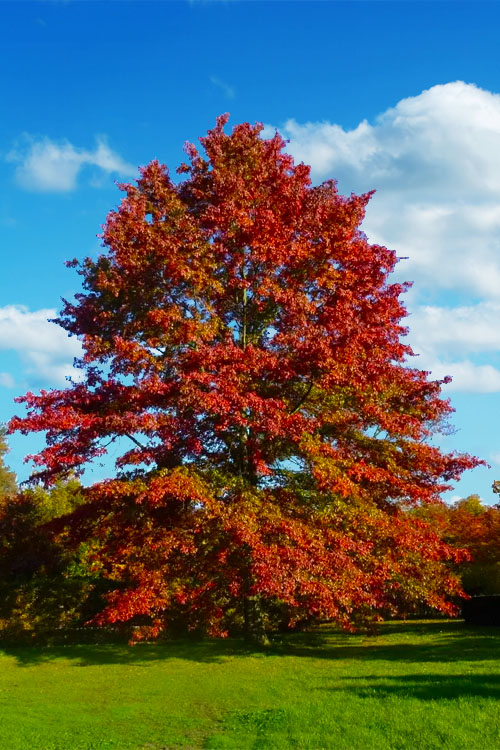
Pin Oak (Quercus palustris)
- Wildlife Attraction: Small acorns feed wood ducks, mallards, wild turkeys, deer, and rodents. Supports over 500 species of caterpillars.
- Human Food or Wildlife Uses: Used for shade and construction timber. Acorns are more easily swallowed by smaller birds and mammals than other oak species. Lower branches provide low-level screening cover.
- Size & Space Needed: Grows 60–70 feet tall and 25–40 feet wide. Requires 30–40 feet of spacing.
- USDA Growing Zone: Zones 4 – 8.
-
Spicebush (Lindera benzoin)
- Wildlife Attraction: Primary larval host for the Spicebush Swallowtail butterfly and Promethea silkmoth. Berries are eaten by wood thrushes, catbirds, and migrating songbirds.
- Human Food or Wildlife Uses: Leaves, twigs, and berries are used for herbal teas and allspice seasonings. Female plants provide high-fat berries for autumn bird migration energy.
-
Yellow tulip tree (Liriodendron tulipifera), also called the tulip poplar or yellow poplar, is the tallest hardwood in eastern North America. It is a fast-growing, long-lived shade tree known for its distinctive, four-lobed leaves, cup-shaped blossoms, and brilliant golden-yellow fall foliage. [1, 2, 3, 4, 5, 6]Size
- Mature Height: Typically reaches 60 to 90 feet in cultivation, but can exceed 100 feet in the wild. Exceptional specimens can reach 150 to nearly 200 feet.
- Mature Spread: 30 to 50 feet wide.
- Growth Rate: Fast-growing, often adding 2 feet or more in height per year under optimal conditions.
- Trunk Diameter: Mature trunks usually reach 4 to 6 feet, occasionally growing up to 8 to 10 feet wide.[1, 2, 3, 4, 5, 6, 7]
Key Characteristics- Flowers: In late spring, it produces large, cup-shaped, greenish-yellow flowers with a prominent orange band at the base, which resemble tulips. They generally appear high in the canopy after the leaves have emerged. [1, 2, 3]
- Leaves: Bright green, waxy leaves with four lobes and a distinct flat or truncate tip. They turn a stunning golden-yellow in the fall. [1, 2, 3]
- Structure: Features a very straight, column-like trunk with high, pyramidal to broad-conical branching on mature trees. The winter buds are distinctively shaped like a duck's bill. [1, 2, 3, 4]
- Fruit: Produces cone-like, scaly brown clusters of winged seeds (samaras) that mature in the fall and disperse over winter.
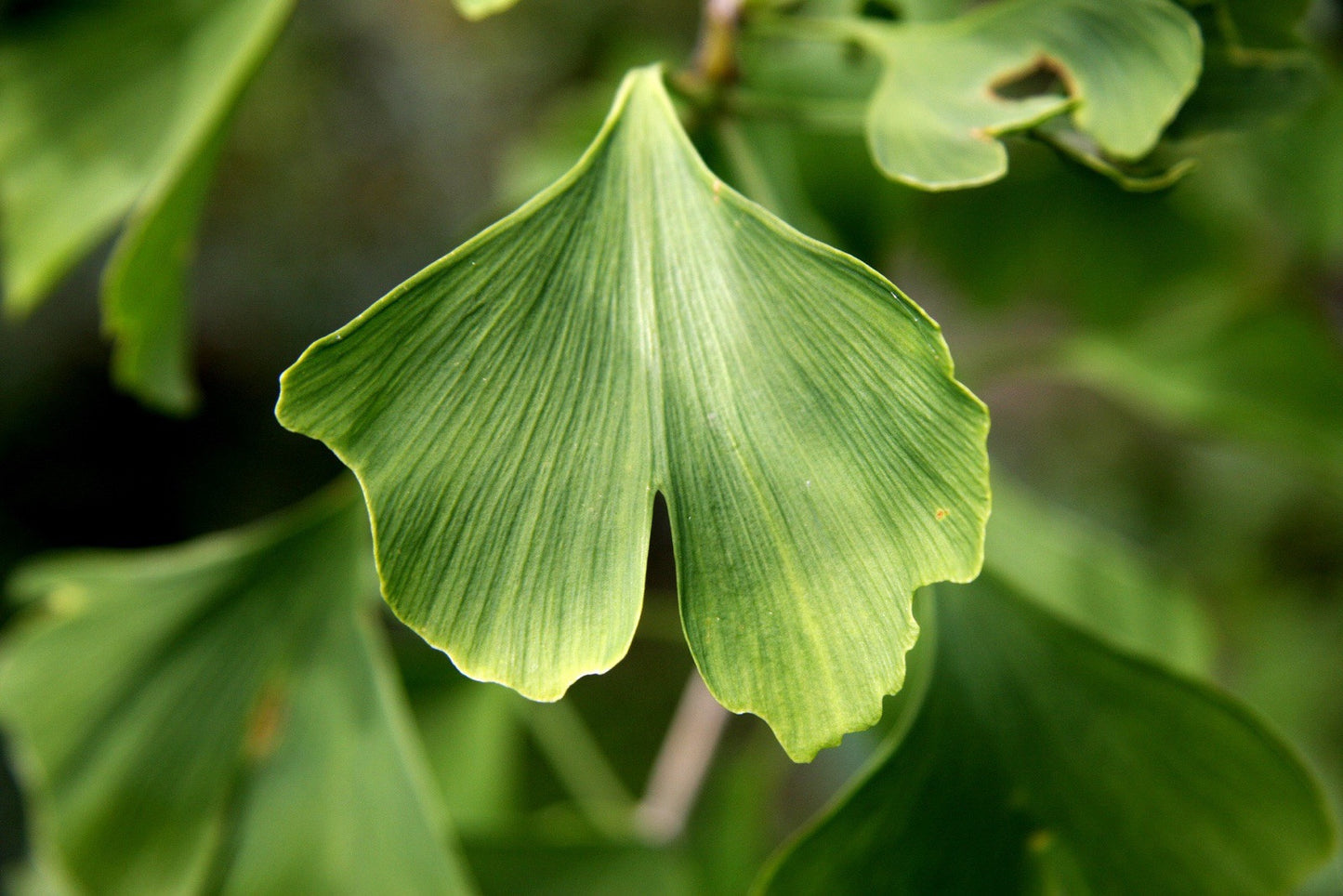
Ginkgo biloba has gorgous yellow maidenhair colored leaves in the fall and the leaves are used for their health & memory benefits. It is the oldest living tree species!