


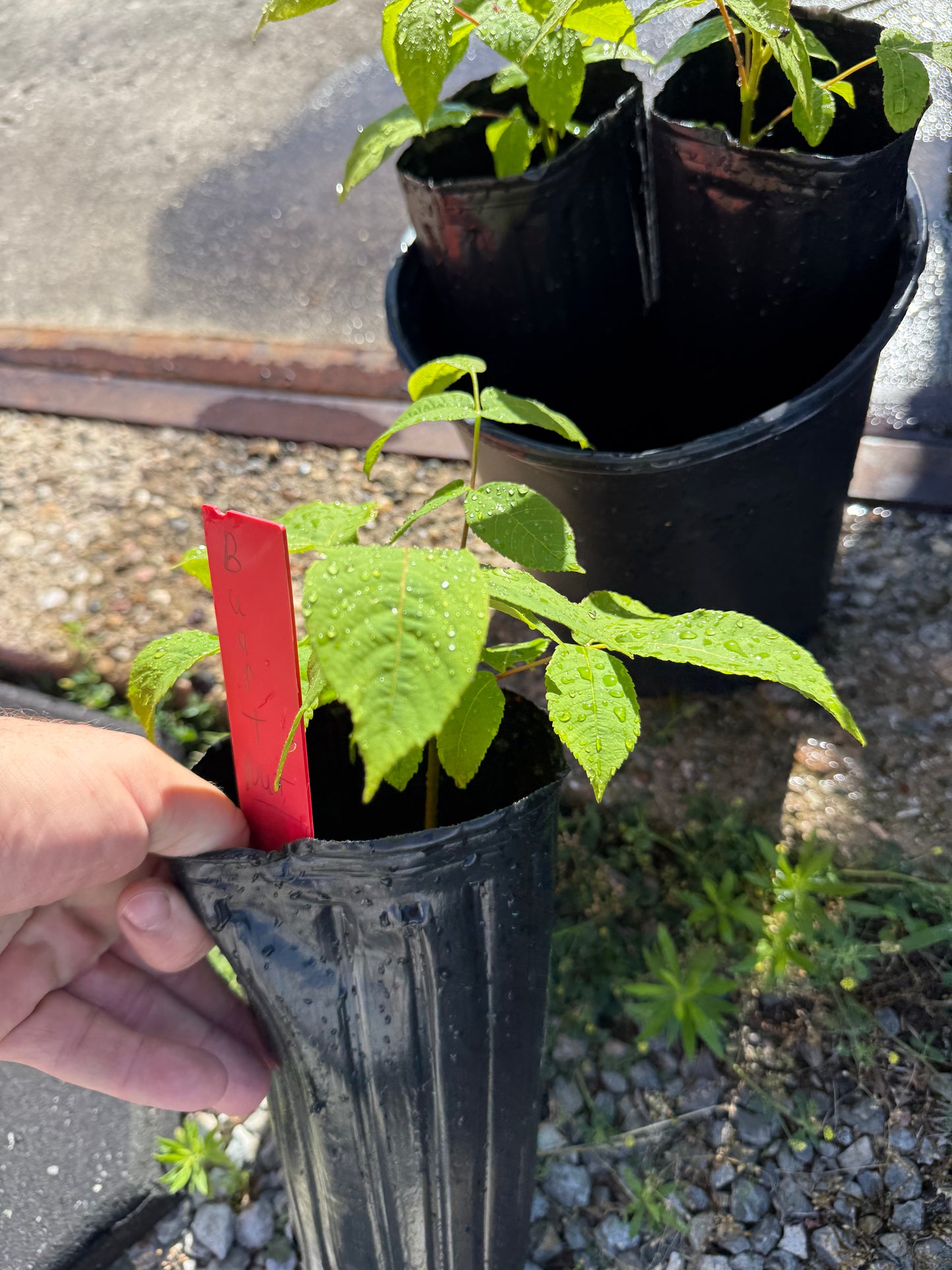
Nice healthy plant in a deep tree pot. It arrived very quickly and in good shape
1
/
of
3
Buart Nut Tree- cross of Heart Nut (white walnut) and American Butternut, more disease resistant than pure butternut, 4x12” potted
Buart Nut Tree- cross of Heart Nut (white walnut) and American Butternut, more disease resistant than pure butternut, 4x12” potted
Regular price
$20.00 USD
Regular price
$24.95 USD
Sale price
$20.00 USD
Unit price
/
per
Shipping calculated at checkout.
Share the love with friends!
Couldn't load pickup availability
Buartnuts (a cross between the Butternut and Heartnut) thrive in USDA Cold Hardiness Zones 3 through 7.
Because native Butternuts are endangered by canker disease, Buartnuts are highly prized for their canker resistance and delicious, buttery flavor.
Ideal Growing Zones & Conditions
- Hardiness Zones: USDA Zones 3–7. Some cultivars can survive down to -40°F, making them exceptionally cold-hardy.
- Sunlight: Requires full sun for optimal nut production and growth.
- Soil: Prefers deep, moist, rich, well-drained soil. They naturally do well in bottomlands.
- Growth & Yield: Fast-growing (up to 6 feet in a single year when young). Mature trees reach 40–60 feet tall and produce nuts within 6 to 10 years.
People generally love the flavor of buartnuts (a cross between a butternut, heartnut, and Japanese walnut) . They are highly praised for their mild, incredibly smooth, and buttery taste with a subtle smokiness , making them an excellent premium nut for snacking and baking.
Flavor & Popularity
- Taste Profile: Similar to a standard English walnut , but sweeter, richer, and lacking the bitter tannins often found in raw store-bought walnuts.
- Texture & Shells: The kernels have an oily, creamy mouthfeel. Because they inherit traits from the heartnut, buartnut shells are often much thinner than regular walnuts and are significantly easier to crack.
Tree Production: Buartnut vs. Pecan
- Growth Speed: Buartnut trees exhibit extreme "hybrid vigor," meaning they grow much faster and can start producing nuts far more quickly than traditional butternut trees. Pecans generally start bearing nuts around 6–10 years.
- Hardiness: Buartnuts are highly sought after for northern climates, as they carry the intense cold-hardiness of the butternut tree.
- Disease Resistance: One of the greatest benefits of the buartnut is that it inherits resistance to the devastating butternut canker disease from the Japanese walnut, allowing these hybrids to survive where pure butternuts cannot.

Customer Reviews
Overall rating: 5.0 / 5 from 1 reviews.